Population-Based Care Management: Improving Health and Controlling Costs
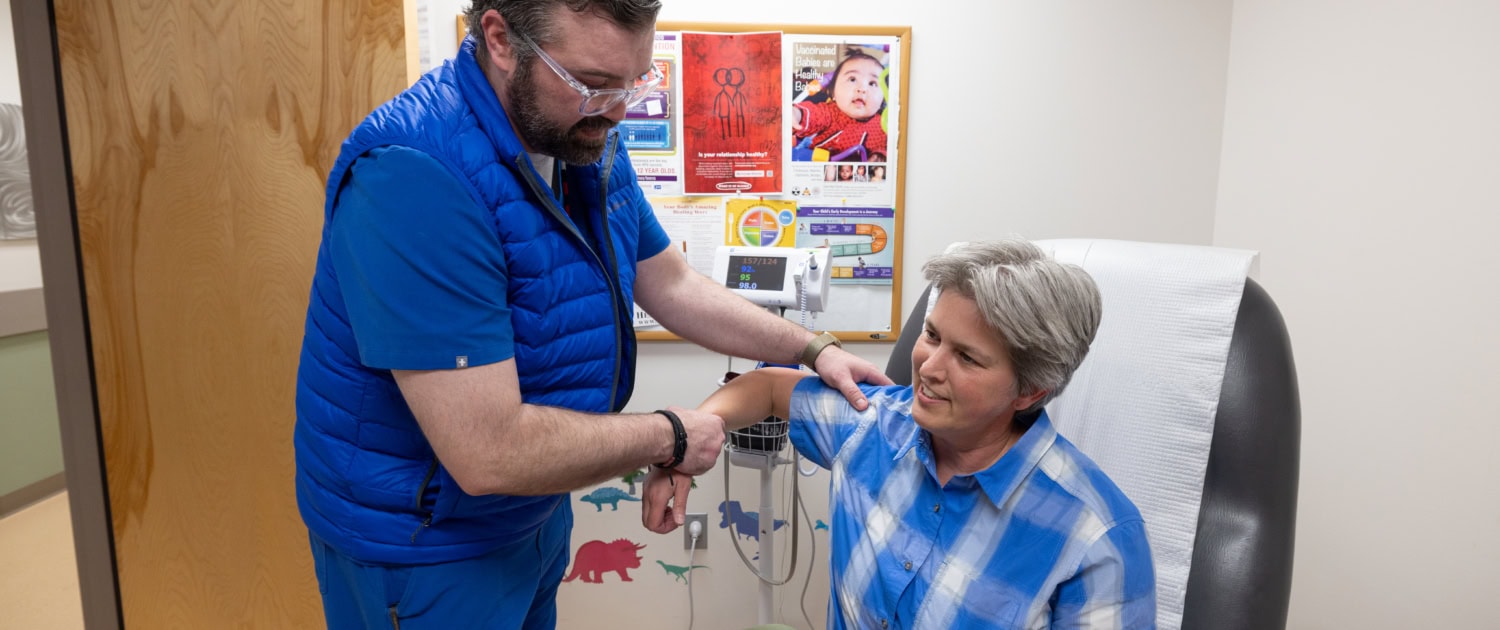
Finances are a major concern for many healthcare organizations today. With the potential for decreases in revenue from various sources, controlling costs becomes a very important part of the overall financial picture. However, controlling costs does not have to mean sacrificing care quality or the health of customers. One method Southcentral Foundation uses to both control costs and improve community health is population-based care management. One of the main ways SCF achieves this is through nurse case management, where registered nurses work as part of SCF’s Integrated Care Teams to support customer-owners in achieving wellness.
At SCF, population-based nurse case management ensures continuity of care and encourages building relationships between customer-owners and their care team, which supports overall wellness. Customer-owners are empaneled to a provider who they choose, and each provider team is responsible for a panel of customer-owners. The team’s registered nurse case manager handles panel management for the team. This includes, but is not limited to, the following:
- Building relationships with customer-owners to support them in achieving overall wellness.
- Taking a holistic approach to wellness that includes acute, chronic, and preventive care needs.
- Checking to see if customer-owners coming in for appointments are due for routine screenings or checkups on chronic conditions. They also check for customer-owners who are overdue for these screenings or checkups and either arrange appointments as appropriate or provide for those needs based on standing orders.
- Triaging incoming calls to determine which calls can be handled by the case manager, which need to go to the provider, and which should be scheduled for an appointment. This is based on the overall health of the customer-owner and not just the issue they are calling about.
- Keeping a reminder file for appointments about follow-up care.
- Connecting customer-owners with external health and community resources, and supporting them in accessing those resources to support continuity of care.
- Assisting providers with medication refills.
- Using data and HEDIS benchmarking to analyze performance from the team, clinic, and the systems level, and identify tools the team can use to improve health outcomes. (HEDIS is a set of healthcare quality measures compared nationally).
An important thing to consider in population-based care management is how to support customer-owners who have higher health care needs than most. SCF does not restrict these customer-owners from accessing the health care system; rather, SCF makes use of the relationships they have with their care team members to support them in accessing the services they need (both internal and external to SCF). The goal is to support the customer-owner in reaching overall wellness rather than focusing on specific health issues.
Registered nurse case managers provide healthcare access to customer-owners and in doing so, preserve and expand provider and specialty clinic access. Much of their work is done outside of the visit, including care coordination, education, medication management, follow up on labs and imaging, and healthcare navigation. This provides a positive customer experience, improves health outcomes, makes more efficient use of healthcare resources, and contributes to reduced healthcare costs.
If you would like more information about population-based nurse case management at SCF, or any other aspect of SCF’s Nuka System of Care, feel free to contact the SCF Learning Institute.